Spotlight
By Nour Ezzedine
October 02 2026
By Nour Ezzedine
October 02 2026
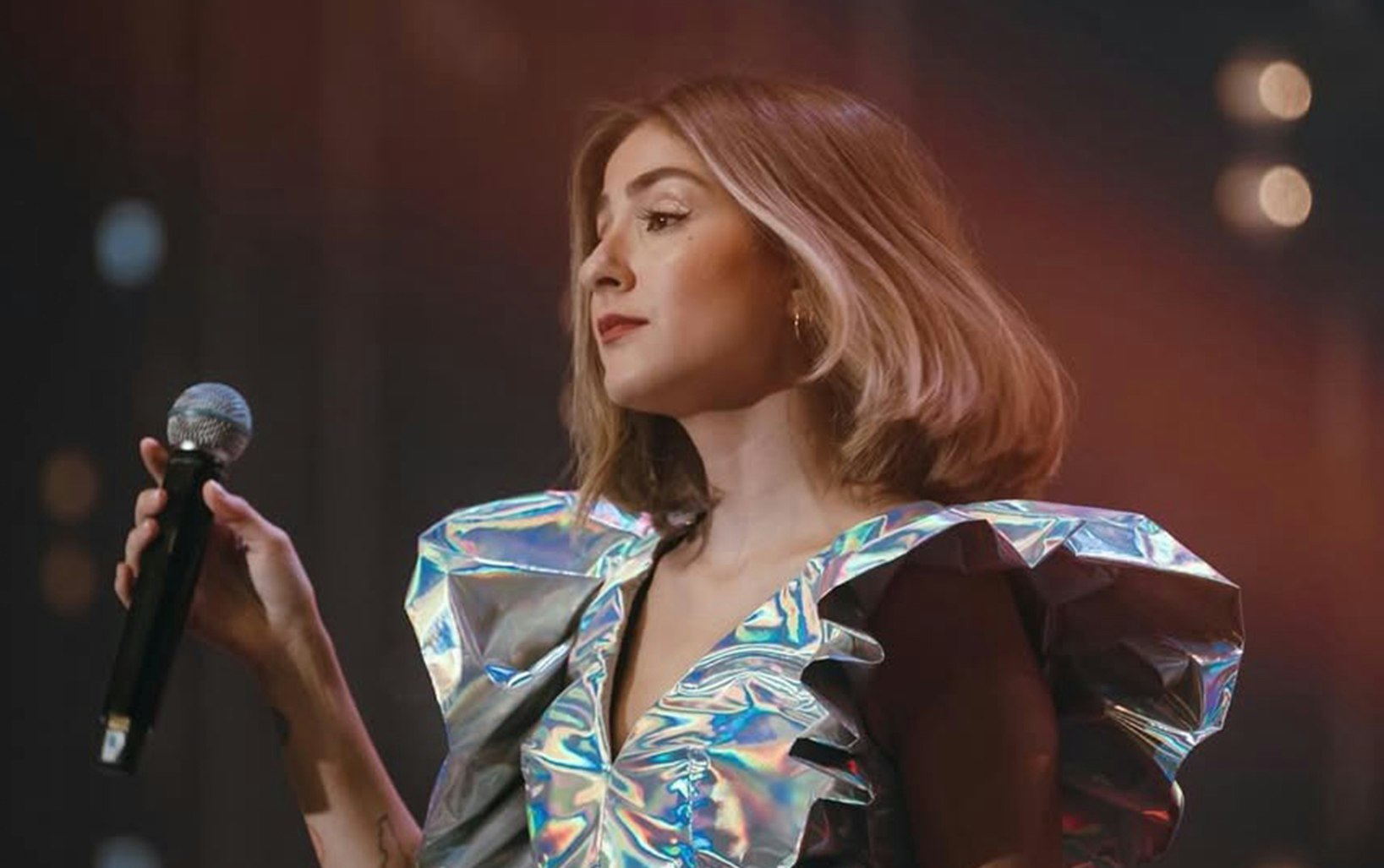
Marilyne Naaman has steadily carved her artistic path by blending acting with music, building a presence defined by a calm, assured voice. She first drew attention through covers of well-known songs, revealing a precise vocal control and a distinct performance style that earned her an early and growing following.
Her single “5 Minutes,” released at the end of 2021 with a music video, marked her first solo step that gave listeners a sense of her sonic identity. With its subtle emotional texture and polished delivery, the track signaled the rise of a new voice in the Lebanese music scene.
Alongside her music, Marilyne appeared in several Ramadan series, most notably “A’a Amal”, where she performed original songs such as “Lech Ma Bterjaa?” This gave viewers a chance to experience her voice within a dramatic context, blending acting and music on one screen.
2023 became a pivotal chapter for Marilyne, as she took the stage on The Voice France, delivering a deeply emotional performance of “Je Suis Malade” that captured the admiration of both judges and audiences. That same year, she released her third single “Masafi,” a milestone that reflected her artistic maturity. Shot in the tunnels of the Paris Metro, the music video embodied her evolving, more personal vision.
With a sound shaped by indie and pop sensibilities, yet anchored in the emotional depth of Lebanese music, Marilyne has crafted an identity that feels intimate, expressive, and constantly evolving. Each song becomes an exploration of new colors, and no single project can contain the full scope of her artistic expression.
Her recent performances across cities like AlUla, Dubai, and Amman further proved her commitment to reaching audiences in places she has never been before. And in her latest collaboration with Anthony Adonis on “Mech Nafs El Chi,” Marilyne once again showcased her ability to merge personal emotion with refined musical craft.
In our exclusive interview, Marilyne opens up about her beginnings, her journey as a singer, her latest releases, and her vision for expanding her sound to a broader world.
1. Songs like “5 Minutes” and “Masafi” were pivotal in your early career. How did you feel when they went viral, and do you think they gave listeners a true picture of who you are?
“5 Minutes” was the song I chose to launch my musical journey, because its imagery, words, and phrasing reflect my personality and the way I speak. I kept searching for references that aligned with my style, but when I heard the demo for “5 Minutes,” I immediately felt it represented exactly how I wanted to introduce myself to people. Working on it was a huge challenge, as it was my first original song, and the hardest part was figuring out where to begin, and what that very first step should look like.
I’m always grateful that even three years after people first discovered me through a more commercially successful song that charted well, “5 Minutes” brought listeners back to see me again in a new light. And when I released “Masafi,” it became extremely personal, because after competing in The Voice France, I went through a phase where I questioned my presence and identity as an artist. I felt so proud to share that authenticity, whether through the video, the visuals, or the song itself, which reflects who I am at my core.
2. We noticed you blend pop and indie, while still carrying a Lebanese musical influence. With that in mind, which song best represents your artistic identity, and why?
Honestly, I feel like I move fluidly between indie and pop, and sometimes explore completely different colors in my music. It’s very hard to pick one song that reflects everything I do, because my playlist is full of different genres and artists, with varied sounds, rhythms, and themes, not to mention the mix of instrumental elements and rap influences.
What I offer my audience right now is a diverse musical palette; everything I’ve heard and connected with has shaped how I express my emotions. Lebanese music can be rich and intense, pop is shaped by technical factors, and indie is where I find the honesty I’m always seeking.
Most of what I release today leans toward indie because it feels closest to emotional truth, but each musical style brings out a different feeling. That’s why choosing a single song to define me is extremely difficult, and it explains why my work intersects so many genres.
3. You’ve performed a lot recently, including your first-ever tour. How was the experience, and which stages do you dream of performing on?
What matters most to me right now is seeing my audience in countries I’ve never visited, and in places I haven’t been able to reach yet. I think of it as more than just performing on a stage; stages carry history, and artistically, it means a lot to stand where legendary performers once stood. But at this moment, what occupies my mind most is a real, human connection with the people waiting for me, wherever they may be, even if it’s in Madagascar.
4. You previously mentioned focusing more on music than acting this year. What pushed you to make that choice?
This year, I decided — with great difficulty — to step away from taking part in the pre-Ramadan season. This particular project in Lebanon is taken very seriously, demands a lot of craftsmanship, and requires a long period of commitment. I chose to step back specifically because it usually takes five to six months of my life. I felt I was holding back my musical potential; ever since The Voice, I’ve carried so many musical dreams I want to pursue, yet I kept postponing them because that project demands half a year of full-time filming.
Travel mattered too. This year, I performed in AlUla, Dubai, Jordan, and Qatar, and soon I’ll be in Paris and Europe. Filming requires rest, focus, and large stretches of time, sometimes more than a full day, and I don’t want to compromise the quality of my acting, especially now that I know people expect a lot from me. I never want to let them down.
5. You recently collaborated with Anthony Adonis on your latest single “Mech Nafes El Chi.” How did the idea turn into reality, and did it meet your expectations?
When this song reached me, knowing that Anthony and I have been trying for years to work together, whether on a duet or a joint project, it was the first time I felt I didn’t want to change anything. Usually, even when I don’t make major edits, I still have some doubts. But this time, I felt no hesitation at all. It was the first demo I ever heard and immediately said to myself: “Yes, this is exactly what I want. This is exactly how I feel.”
The song perfectly expressed how I see heartbreak, separation, and the maturity that follows them. It came to me so naturally, but it touched me deeply, and felt like it represented me, and gave me a way to share my emotions with people honestly.
Share this