Scene & Culture
By Youssef Ali
October 02 2026
By Youssef Ali
October 02 2026
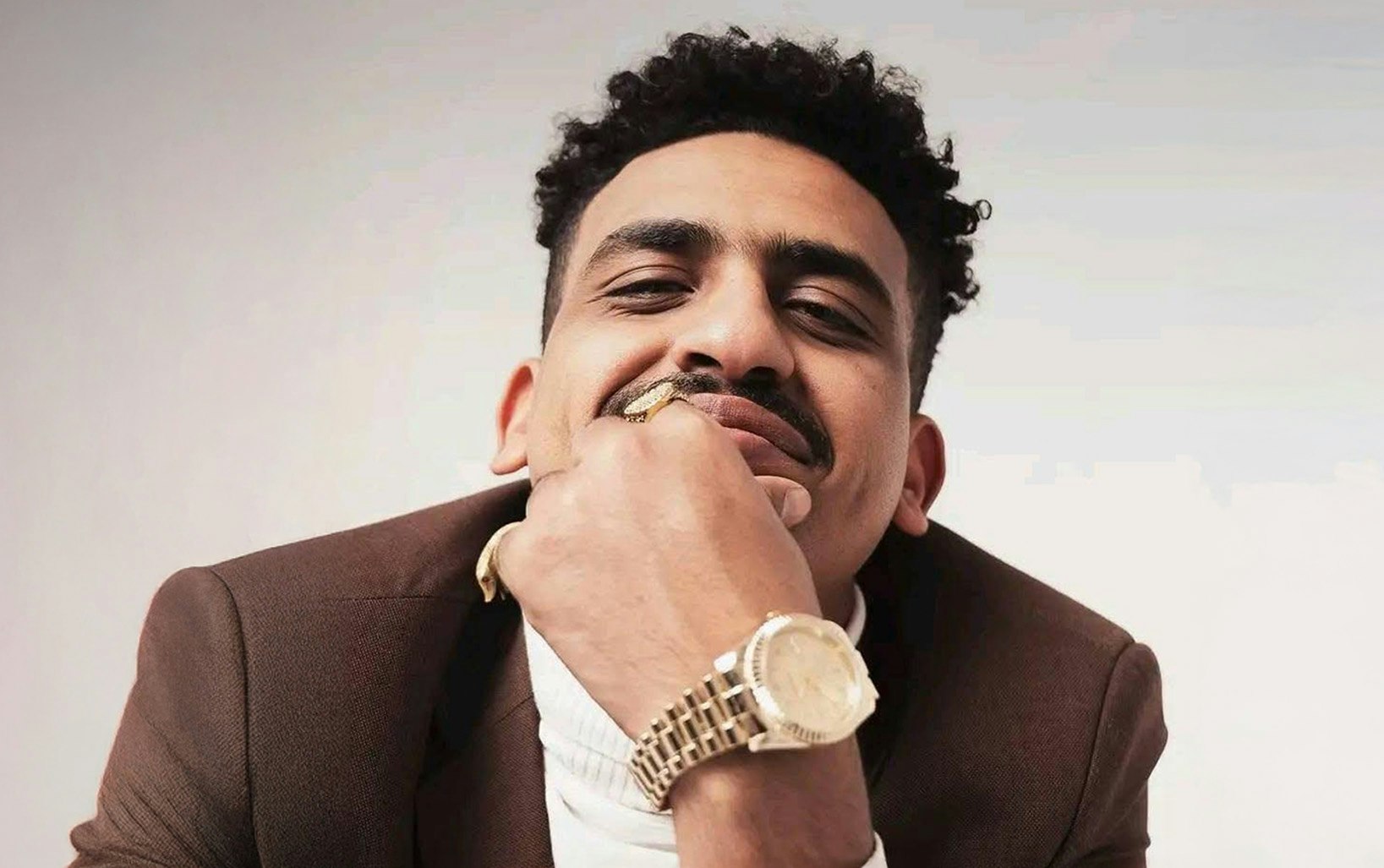
At the beginning of 2024, Sudanese rapper Awab had released only one track, titled "Intro." Yet by the end of 2025, his name had become among the most-streamed Sudanese rappers. This presence did not come by chance; it resulted from a stream of diverse releases that put him on the radar as an influential and steadily rising artist, approaching his craft without fear or concern for fitting into a specific mold.
Awab has showcased a multifaceted persona, moving confidently between styles from pure old-school in "Shilil," to drill infused with Sudanese melodies in "Mr. Hip Hop," and onto singing in "Bidayat" and "Eve."
The young artist, born in the early 2000s, explored every corner of hip-hop. He stood out in freestyle through his participation in "Freestyle Macchiato," organized by Rap Street via Black Bus, tackled the realities of his country openly in "Shilil" and "Intro," and later showcased his skills and powerful punchlines in "Ctrl A," marking a moment of dominance in the Sudanese rap scene.
It did not take long for him to grasp the rules of the game. He expanded his listener base through a notable collaboration with Hleem Taj Alser in "Qamaria," and further broke conventional commercial boundaries with a cross-identity collaboration with Egyptian producer Dr. Mo3geza in the track "Al-Juzur wal-Madd" from the album "Hikayat."
Awab gives his audience no time to catch their breath, moving steadily to solidify his career, drawing on his poetic background from adolescence when he wrote poetry as a hobby. In this interview, he speaks about his beginnings, sources of inspiration, his fearless experimentation, and his vision for the future of his musical journey.
In the track "Ctrl A," which many Sudanese hip-hop followers considered a diss track, you sent signals to several rappers in the scene. Why did you choose to release this track at that moment, and how do you view the impact of beef in hip-hop overall?
I don’t see "Ctrl A" as a diss track. It’s an expression of enjoying hip-hop, reflecting my competitiveness and energy, and an attempt to revive Sudanese hip-hop. But I do believe in the importance of beef, it can always energize the genre and bring excitement to the scene. It’s an essential part of the culture.
In your early works, we notice old-school influences. Do you prefer this style over the new wave?
I listen to many releases and rappers from both the new wave and old school, and I also read poetry and novels, watch series and movies, these all influence my style alongside my personal experiences. I prefer to define my style as "Awabi" rather than fitting into a flow or genre. I believe an artist grows by experimenting and discovering something new each time.
You are primarily a poet and writer, which is evident in your choice of themes. Why did you choose hip-hop as your main artistic direction?
I started writing through poetry, but over time I felt that poetry alone wasn’t enough to express my artistic personality. I discovered a natural inclination for songwriting, especially rap. Currently, I study creative writing, and I may explore literary writing in the future—or perhaps other fields as well.
Your music seems to focus heavily on the situation in Sudan. What motivated this choice?
I grew up and studied in Khartoum and was born in Omdurman, so I feel very connected to Sudan and proud of my Sudanese identity. My country has played a key role in shaping my artistic and personal experience. The local scene also motivates me with its diversity, competitiveness, and richness in voices, it’s one of the strongest scenes today.
Were there poets or writers who influenced you in your adolescence? And which current rappers in the Arab scene inspire your creativity?
I read works by Nizar Qabbani, Mahmoud Darwish, and Hisham Al-Jakh. From Sudan, I was influenced by Taj El-Sir Kaneh, Hameed, Seif Eldin Al-Dosouki, and other Sudanese poets. In rap, I get excited by releases from Laegi-C, Big Sam, Marwan Pablo, Wejz, and Cheboubah—they continuously inspire me to experiment and evolve.
Has your artistic project reached a stage where you’re considering releasing an album? And which artists would you like to collaborate with in the future?
I’m on the verge of completing my first album. I would like to collaborate with Big Sam, as I’ve been a fan and they have greatly shaped my musical development. I also hope to collaborate with Laegi-C and Too Lit, as they inspire me with their musical daring—both in experimenting fearlessly and writing beyond conventional boundaries.
Share this