Music Industry
By Ayah Bazian
June 01 2026
By Ayah Bazian
June 01 2026
In the early 90s, a certain sound took root in the newly unified dancefloors of post-Wall Berlin. Taking elements from Chicago house, British rave, Belgian new beat, Acid house, and wrapping them into a frenetic, fast-paced melody sprinkled with soulful African-diasporic vocals and rap, this music became known as Eurotrance. Eurotrance soon birthed a higher-BPM genre that went beyond dancefloors and into films, TV shows, and even the soundtracks of children’s birthday parties: Eurodance.
There’s perhaps no other sound that exemplifies the optimism of the late 90s and early 2000s as Eurodance. In many ways, you had to be there: the Iron curtain had just fallen, internet use was exponentially growing, and Timbaland and Kanye were sampling artists from across space and time like Warda and Chaka Khan. The world was one big cuddle puddle of genre-bending, bubble-blowing, soul-swapping, high energy love. And Eurodance was the musical manifestation of that love. After years of subsequent wars, people were ready for peace, and more urgently, they were ready to have fun.

Eurodance was fun. Each of its songs encapsulated a Benetton-worthy diversity of music rolled into one 3-minute melody. In the early 90s, artists like Ice MC blended ragamuffin rapping style with soaring female vocals, putting the whole thing over a thumping bass that’s impossible not to dance to. In 1999, a Finnish DJ and producer by the name of Darude made one of the most recognizable and iconic Eurodance tracks of all time: the aptly-titled Sandstorm. With its growing swirl of beeps and dots, the song really feels like a musical sandstorm, or soundstorm.
With the rise of the internet and satellite TV, Eurodance zipped across borders. In the Middle East, it arrived via newly accessible foreign channels like Viva Polska and online downloads – both legal and illegal. In Saudi, where technological development skyrocketed alongside road development, cities and urban landscapes transformed into car-first spaces, with wide, six-lane highways ripe for a quickly rising new pastime: cruising.
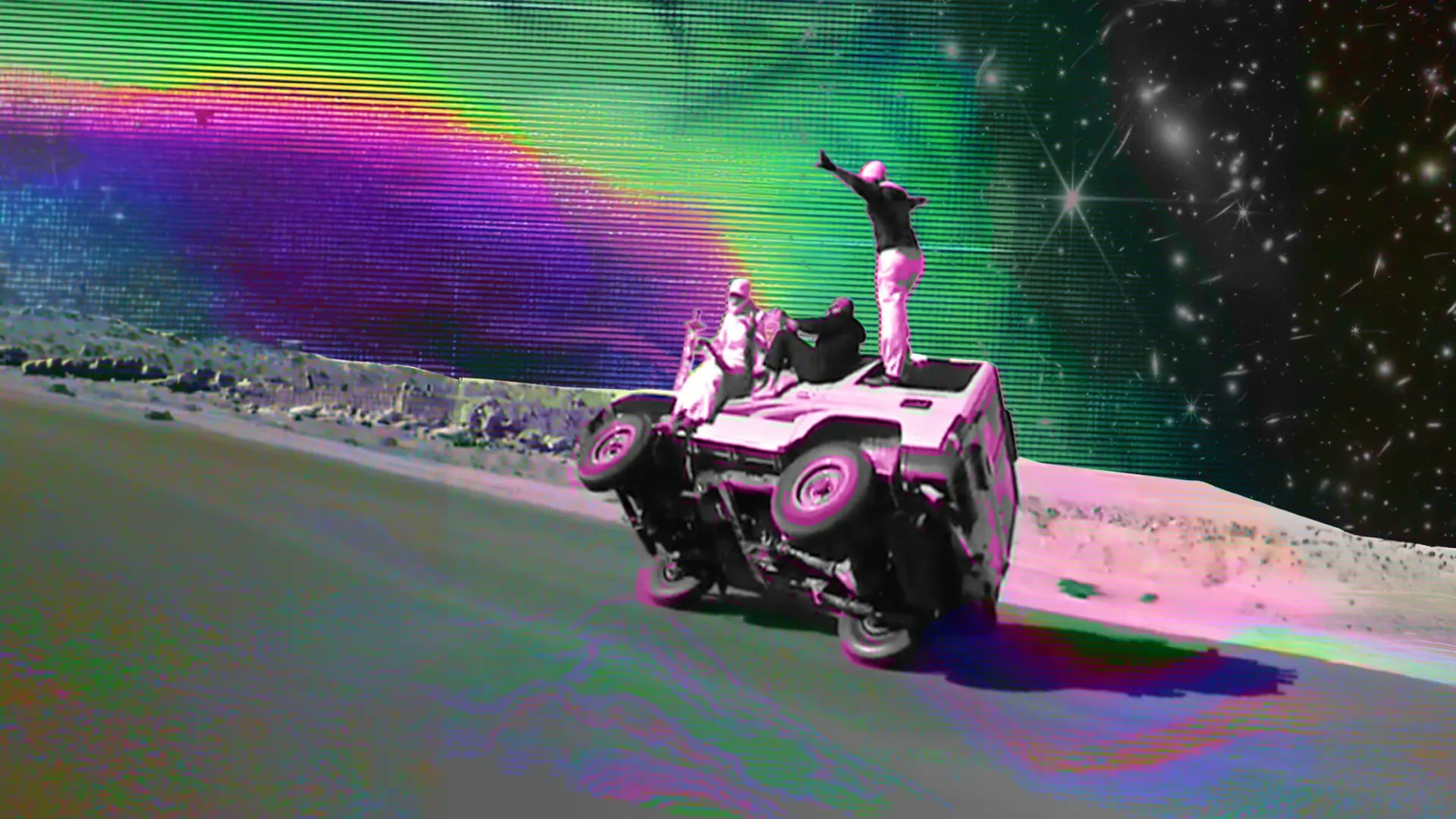
From cruising came Hajwala, a form of high-speed drifting that took the Kingdom by storm. Daredevil crews would gather in different parts of cities to drift, performing a range of stunts that were as basic as donuts (تخميس) and as advanced as using a ramp to get a car on its side, sometimes for long enough to change a tire in mid-air.
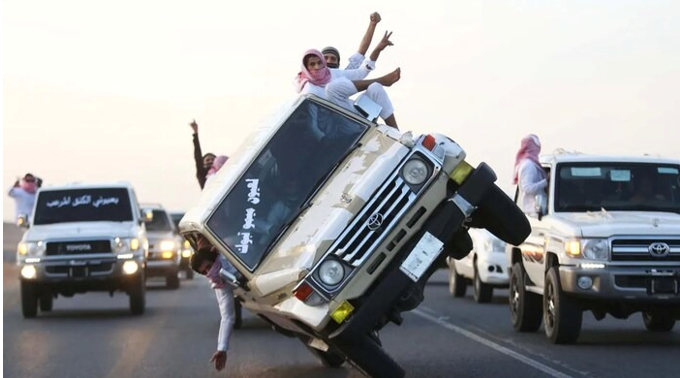
Every subculture gives rise to its own unique art, fashion, and culture. Hajwala was no different. Such a high-adrenaline sport needed to find its soundtrack, and as the internet became inundated with Saudi drifting videos, those videos were set to the pounding rhythms, romantic female voices, and staccato rapping of Eurodance. It’s hard not to watch those videos and find yourself bopping your head to the beat, entranced by the antics. Both the music and the driving shared the same DNA: speed, spectacle, and a defiant, almost giddy sense of freedom.
Yet as the danger mounted and authorities put a stop to this roadside recklessness, Hajwala found itself in the barrels of history. Its lives on, however, through new Saudi drifting video games and, of course, the music. There's something about that combination: the open road, the spinning tires, and the euphoric synth lines that still feels like pure possibility. Whenever I need a burst of energy or a dose of optimism, I put on a Hajwala playlist and instantly feel alive. If you ever want motivation for your run or a sweet hit of nostalgia, I suggest you do the same. And if the road itself is calling, well… there's always the video game.
Share this