Scene & Culture
By Ayah Bazian
July 17 2026
By Ayah Bazian
July 17 2026
If you grew up in shargeeya, there’s a big chance ARAMCO was a defining element of your life. I don’t mean physically, although it’s hard to ignore the behemoth residential camp in Dhahran. Even if you never stepped foot inside a single centimetre of its 58 square kilometers —- where you’d instantly be teleported into a suburban American town — the Saudi Oil conglomerate had its reaches far beyond the towering compound walls. Namely, through its radio station: the first English-language radio station in the entire Kingdom.
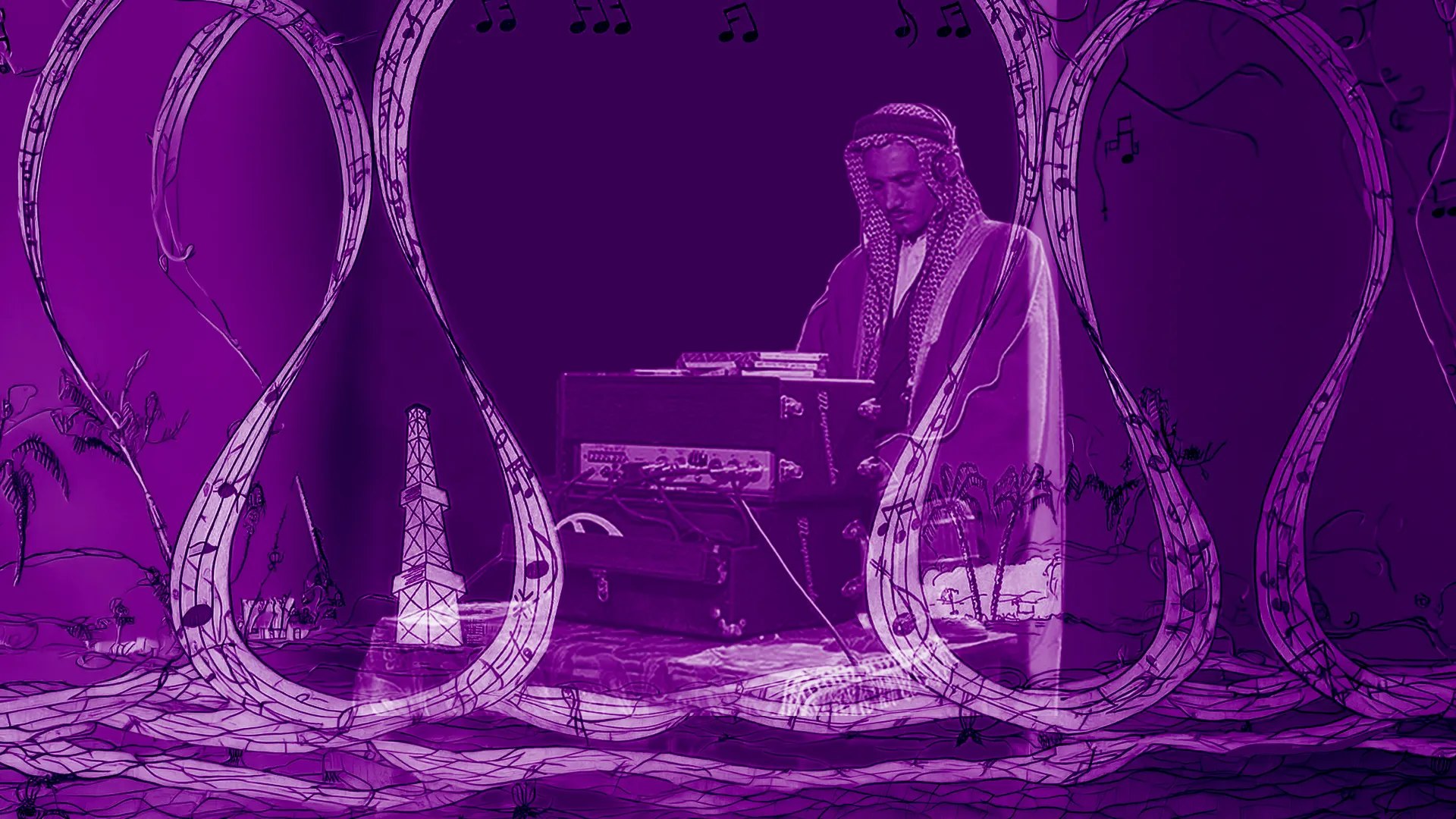
Picture this: it’s 1937 in Dhahran. The ARAMCO compound is still new. You can almost smell the fresh paint emanating from its coral-coloured walls in intoxicating waves. At its centre sits a massive, olympic sized swimming pool for its workers. In the sweet desert spring, the pool buzzing with bronzed Aramco employees, their wives, and a sprinkling of children. Between the splishing, the chatter, and the chirping of locusts, one manager feels like something’s missing: music. So he installs a set of brand-new speakers around the pool, and begins playing a selection of records. Soon, guests and residents come to find the music as defining to the experience as the pool. Every weekend, they flock to the pool to cool their bodies in the chlorinated, cooled water, and their souls with the soothing clarinets of Artie Shaw, Glenn Miller’s jive-y dance arrangements, and Duke Ellington’s punchy piano jazz.
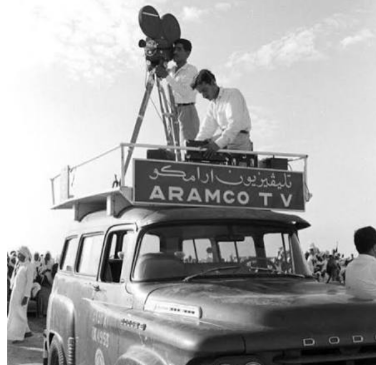
Those informal poolside jam sessions soon became formalized into a radio station broadcast from a central room in Aramco to the kitchens, bedrooms, or living rooms of each of its employees. This was followed shortly afterwards by the first official English-language news broadcast for Aramco radio was in the late 1940s. In the 1950s, just as rock music – helmed by Elvis Presley – was making hoards of teenage Americans weak at the knees, the company launched official radio services in Dhahran to entertain local residents and broadcast news.
Whether you wanted to or not, ARAMCO’s radio station flooded your ears as a resident of the cities on the East coast of Saudi. From Al-Ahsa to Al Khobar, Dhahran to Dammam, flipping through the radio would inevitably stream Americana straight into your ears: rock, country, grunge, pop rock, bluegrass, and even some metal.
It’s no secret that the first wave of underground rock bands in the country came from Shargeeya. Whether consciously or not, they were the only people in the country with unrestricted access, via airwaves, to the sounds of electric guitars, drums, and English vocals.
The first of these bands was Sound of Ruby. Active since the 1990s, they're cited again and again as one of the country's first rock bands, and they never really stopped: eight albums deep, with a sprawling four-LP set reportedly still to come. Listen closely and you can hear the wiring. There's the raw, sinewy menace of American post-hardcore — Rollins Band, BHS — bolted onto the storytelling of Saudi folk figures like Fahad bin Saeed and Basheer Shanan. Henry Rollins on one shoulder, Khaleeji folk on the other.
Out of the same Eastern Province underground came Inversion, who took the harder, stranger road. They're one of the only Saudi bands working in noise rock: abrasive, feedback-drowned soundscapes that owe an obvious debt to The Jesus Lizard and to Steve Albini, the famously uncompromising engineer behind Big Black and Shellac. Their first material surfaced on CDs during the peak of the homegrown "SA Metal" scene in the 2000s; today they release singles online, still allergic to anything resembling a clean hook.
If Inversion pushed toward noise, Creative Waste went for the throat. Formed in the early 2000s across the gulf-coast triangle of Qatif, Dammam, and Khobar, they play grindcore: short, savage, politically charged bursts that sit somewhere in the lineage of Napalm Death and Discharge. They became one of the scene's few genuine exports, sharing bills abroad and eventually making history at home as the first band to play a public metal show on Saudi soil, in a Khobar café in 2019, a decade after the underground had been driven, well, underground. They're proof of how far the signal carried: a teenager in the Eastern Province, raised within range of the same airwaves, could end up fluent in a strain of extreme American music most Americans have never heard.
Around them orbited other Eastern Province acts like Wrywreath, names that rarely left the region but kept the circuit alive, traded between the same small network of fans who knew which majlis or garage to show up to and when. Few of them were ever recorded properly. Most exist now only in memory and the occasional surviving demo. But together they formed the quiet proof of the thesis: that the first sustained current of rock and metal in the Kingdom ran along the same coast the radio had been soaking for more than half a century.
Share this